
Bagua Map Floor Plan: Practical Feng Shui Floor Plan Analysis for Your Home
Learn how to interpret the Bagua map on your home’s floor plan with practical examples, including how to handle missing sectors and optimize your feng shui home layout.
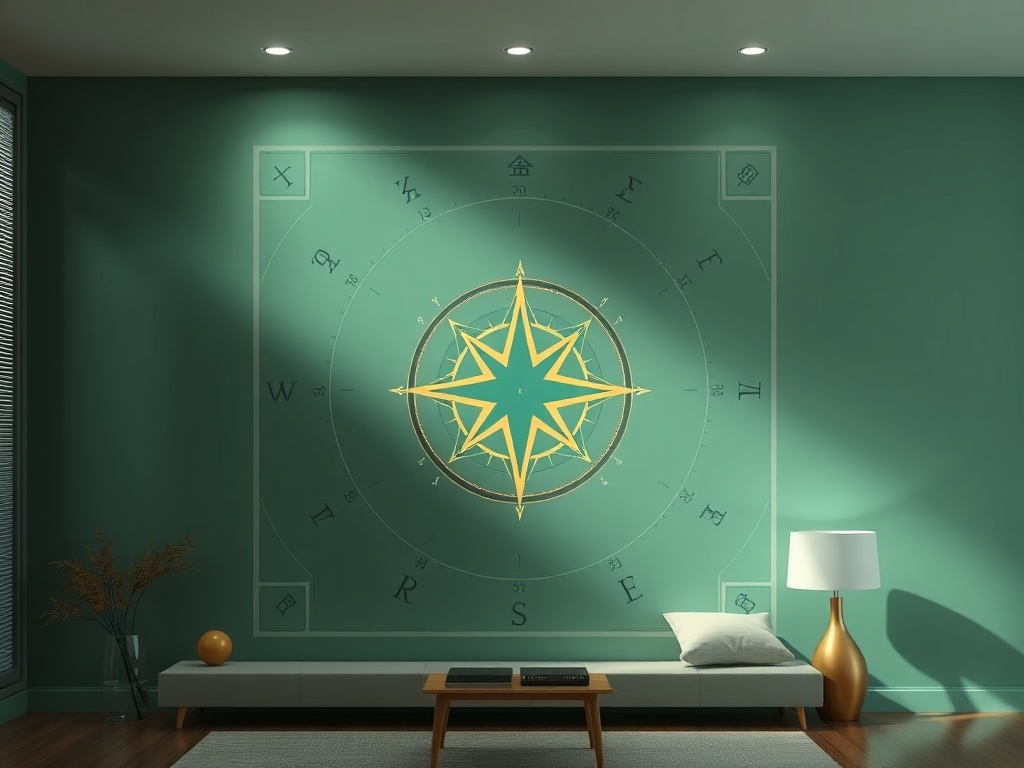
Understanding the Bagua Map and Its Role in Feng Shui
The Bagua map is a foundational tool in feng shui, used to analyze and enhance the energy flow within a living space. It divides your home into nine distinct sectors, each corresponding to an important area of life such as wealth, health, career, relationships, and knowledge. Understanding these sectors allows you to identify which parts of your home influence specific aspects of your well-being and life goals.
Each sector on the Bagua map is associated with particular elements, colors, and shapes that can be used to activate or balance energy. For example, the wealth sector often relates to the wood element and the color green, while the career sector aligns with water and the color black or blue. By applying the Bagua map to your floor plan, you gain insights into how energy, or 'chi,' flows through your home and where adjustments might be needed to promote harmony and positive energy.
How to Overlay the Bagua Map on Your Floor Plan
To begin your feng shui floor plan analysis, you first need to overlay the Bagua map onto your home's floor plan. Start by obtaining a clear, to-scale floor plan of your home, either printed or digital. The Bagua map is typically shaped as a 3x3 grid, so you will divide your floor plan into nine corresponding sections.
Align the bottom edge of the Bagua map with the wall containing your main entrance. This is crucial because the Bagua map’s orientation depends on the entry point where energy enters your home. If your entrance is not centered, the sectors will shift accordingly, which is normal and expected.
Tools such as transparent printouts, tracing paper, or digital design software can help you accurately superimpose the Bagua map. For digital users, many feng shui apps allow you to upload your floor plan and drag the Bagua grid over it, facilitating precise alignment. Take your time to ensure the map fits well, as this will impact your analysis and any feng shui adjustments you make.
Analyzing Missing Sectors in Feng Shui Floor Plans
Real-world floor plans often feature irregular shapes with missing or cut-out areas, leading to absent Bagua sectors. This is common in homes with L-shaped layouts, extensions, or unusual architectural features. Missing sectors can disrupt the balance of energy, but there are practical ways to address this issue.
One approach is to symbolically represent the missing sector inside your home using mirrors, plants, or artwork that correspond to the missing area's element and colors. For example, if your wealth sector is missing, placing a healthy green plant or a water feature near the boundary of that missing area can help balance energy.
Another strategy involves enhancing adjacent sectors to compensate for the absent space. This might include strengthening the energy flow through lighting, decluttering, or using feng shui cures tailored to the adjoining sectors. Remember that the goal is to maintain harmony and support positive energy rather than forcing exact spatial matches.
Applying the Bagua Map to Apartment Layouts
Apartments often present unique challenges for feng shui due to limited space and unconventional layouts. When applying the Bagua map to apartments, it is especially important to carefully align the map according to your main entrance since this defines how energy enters your space.
Because apartment layouts may not have all nine sectors clearly defined or accessible, you may need to adapt the Bagua map to fit your living area. For instance, some sectors might overlap or be represented by multifunctional rooms. In such cases, focus on the dominant function of each space and apply feng shui principles accordingly.
Additionally, consider the external environment, such as views, natural light, and building orientation, as these can influence the energy in your apartment. Using compact feng shui remedies like small plants, appropriate colors, and decor elements can help optimize energy flow even in smaller or irregularly shaped apartments.
Tips for Creating a Feng Shui Home Layout Report
Documenting your Bagua map floor plan analysis can be a valuable step toward improving your home's feng shui. Start by taking clear photos or scans of your floor plan with the Bagua map overlaid. Annotate each sector with notes about its current condition, energy quality, and any missing or irregular areas.
Next, list practical recommendations for each sector, such as decluttering, adding specific elements, or implementing feng shui cures like mirrors or lighting adjustments. Including before-and-after observations can help you track changes and their effects over time.
A well-organized home layout report not only clarifies your feng shui intentions but also serves as a reference for future adjustments. It can be shared with family members or feng shui consultants to ensure consistent understanding and implementation.
About This Content
Editorial standards: Author & Editorial Standards
Methodology: How FengShuiAI Builds Reports
FAQ
What is the Bagua map and why is it important for floor plans?
The Bagua map divides your home into nine sectors, each representing a different life area such as wealth, health, or relationships. Applying it to your floor plan helps you understand how energy flows through your space and where to focus feng shui improvements.
How do I handle missing sectors in my feng shui floor plan?
Missing sectors are common in real floor plans. You can balance their energy by using mirrors, plants, or decor that symbolically represent the missing area or by enhancing adjacent sectors to compensate.
Can the Bagua map be used for apartments with unconventional layouts?
Yes, the Bagua map can be adapted for apartments. It’s important to align the map carefully based on the main entrance and consider space limitations when interpreting each sector.
What tools can help me overlay the Bagua map on my floor plan?
You can use transparent printouts, digital design software, or feng shui apps that allow you to upload your floor plan and superimpose the Bagua map for precise analysis.
Is it necessary to follow feng shui rules exactly when applying the Bagua map?
Feng shui is a flexible practice. The Bagua map serves as a guide to improve energy flow practically and harmoniously. Adjustments should suit your lifestyle and home layout without forcing rigid rules.
Topic Cluster Guides
Upload Your Floor Plan for a Free Summary
Ready to enhance your home's energy flow? Start by overlaying the Bagua map on your floor plan today and explore practical feng shui adjustments tailored to your living space.
For lifestyle optimization inspiration only. Not professional, medical, legal, or financial advice. Results vary by home layout and input quality.
This article provides general guidance on feng shui principles and is intended for informational purposes only. It does not guarantee specific outcomes or results. For personalized advice, consider consulting a qualified feng shui practitioner.
Editorial standards: Author | Methodology